Posts in December, 2008
The law of consequences
December 29, 2008 104 comments
Update: this example has arisen in comments:
If I jump from a burning building in order to save myself from the fire while knowing that my fall will be cushioned by a child (who will not survive the impact), then I intend to kill the child as well as to save myself.
Sorry, there are no polls available at the moment.
As Israel bombs people in Gaza, and arguments are raised again in some quarters about what is or is not “disproportionate” in warfare, as they were in 2006, a useful observation on the concept is offered by dsquared, who reads the Geneva Conventions as saying:
that unintended but inevitable risk to noncombatants has to be proportionate to the military aim which is being carried out.
I do quibble, though, with the phrasing of the first part. As I have written elsewhere, it is my considered view that you cannot be aware of “inevitable” (or even very probable) harm that will come to civilians as a result of your action and at the same time not intend that harm, as well as whatever else you might be intending, when you commit the act which you have foreseen will cause the harm. ((Appeals to “double effect” notwithstanding, even the least disingenuous (ie not among those cherry-pickings from “just war theory” that serve only to provide a moral figleaf for one’s favoured war at the time).)) To take the plainest case, the bureaucrat who signs off on the bombing of “high-collateral-damage targets” intends the predicted “collateral damage”; the best he can argue is that the “positive” consequences outweigh the negative. ((You sometimes hear the alternative case expressed like so: “Well, I didn’t intend to kill any of the specific individuals that were killed as a ‘collateral’ result of my bomb, so in that sense I could not have intended, could I, to kill the unfortunately deceased Mr. and Mrs. X., whose loss of life is of course regrettable”, etc. Unfortunately, this argument alone does not effectively distinguish the “strategic bomber” from the bomber who leaves a home-made explosive device in a shopping mall full of people whose names he does not know. ))
Thus, I do not believe that we should easily accept the concept of “unintended but inevitable risk to noncombatants”, as it appears to contain a built-in excuse for those who have decided to impose the risk by dropping bombs on them. It is a common, almost invisible parcel of ethical Unspeak, that could appear unintended under anyone’s fingers — and that’s the kind of Unspeak against which we all have to be most on our guard.
I commend to you dsquared’s otherwise unimpeachably sensible post, the conclusion especially apposite at this time:
As an obvious corollary to this, any military action at all can be disproportionate if it has no point to it at all; no sensible or realistic objective other than shoring up political support for the people who ordered it. And as a further corollary, it is entirely possible (and indeed, not even unusual) for both sides in a conflict to be guilty of disproportionate use of violence.
What unintended or disproportionate things have you done lately, readers?
 104 comments
Imaginary numbers
December 23, 2008 13 comments
Via the indispensable Aaronowitch Watch (Incorporating “World of Decency”), I see that David Aaronovitch still thinks he was right to be in favour of invading Iraq — well, maybe a smidgeon less right than he used to be, but still much more right than those who weren’t, because they are “anti-history”. (Duh, the war has already happened, people, quit your goddamned whinging.) ((I’m aware that this is not what Aaronovitch means by “anti-history”, but choose this reading nonetheless because it is at least consistent: after all, his own account of history strangely omits the fact, reported in his own newspaper among others, that Tony Blair had already in 2002 secretly agreed to Bush’s war. Instead Aaronovitch perpetuates the myth about the sincere “diplomacy” that “failed”.)) But enough already about Tony Blair and George W. Bush (“and, by extension, me”, Aaronovitch adds modestly) — for David Aaronovitch himself is having a “crisis of conscience”. He has just realised, you see, that a lot of people were, after all, killed following the invasion he desired. How many? Aaronovitch conjures a nice round figure using nothing but the power of his mind:
[t]he reasonable figure for lost Iraqi lives — perhaps 100,000 — is far more than any hawk allowed before the fight began.
As Bruschettaboy at AW(IWoD) points out, the Iraq Body Count figure is between 89,959 and 98,218 at present: if Aaronovitch were aware of it he would have to believe that only somewhere between 2,000 and 10,000 deaths over five years have escaped the notice of Iraqi officials and the media. (Moreover, IBC only counts civilian deaths — it’s interesting how rarely you hear anyone express even theoretical sympathy for, let alone try to count, the members of the Iraqi military forces killed by the invasion, as though we can all happily agree that they were exclusively rabid Saddamists, dictators-in-waiting to a man.) Meanwhile, of course, other estimates of Iraqi deaths attributable to the war are much larger. ((Aaronovitch says that “jihadis caused most of these deaths”; while the 2006 Lancet report figure for Iraqis killed by the “coalition” in particular up until then is 86% higher than the “reasonable” figure he now pulls out of his arse for the grand total of all deaths.))
How, then, has Aaronovitch arrived at the figure of 100,000 total deaths? Bruschettaboy writes:
Facts never really were Aaro’s strong point — I am guessing that he picked on a number some time in 2005 and hasn’t updated it. Frankly I regard this as a culpable mistake, though.
But Aaronovitch’s use of “reasonable” here strikes me as more weaselly and solipsistic than that. Come on, be reasonable. Those really high death counts are too nasty, aren’t they? Let’s just make up a sort of average between zero (what the figure would have been in my and my friends’ exciting fantasy magic war scenario) and some large number that it’s too uncomfortable to think about. And by this unimpeachably creative method we get — what? Perhaps 100,000. Sure, perhaps it’s as high as that. But it’s probably lower! Let’s act as though these numbers don’t tally the deaths of real individuals but just have a reasonable conversation about what perhaps is the case if you squint and wave your hands.
I submit, then, that “the reasonable figure” means “the figure I just made up which causes me personally the least amount of cognitive dissonance while not being so low as to look completely ridiculous to a casual reader”. Reality is often not reasonable, but it is the glory of newspaper opinion columnists that they can be, no matter what the facts.
In other news, Pope Ratzinger has been widely reported as saying something like “homosexuality is as big a threat to the planet as global warming!!!!11oneoneone”, which makes for a pleasantly absurd Christmas headline. In fact, that’s not quite what he said, though the exact meaning of what he did say is anybody’s guess, and should make, I hope, for some enjoyable hermeneutical sessions for all the bloated post-festive-dinner family.
Have a reasonable Christmas, readers!
13 comments
Speak for yourself
December 20, 2008 29 comments
The Times Literary Supplement, a massively august organ to which I have occasionally contributed myself, is the most consistently stimulating periodical I know (of whatever periodicity). Its diarist, however, does have a rather tedious bee in his bonnet, or flea in his sock, about things like “political correctness” and strains of academic writing that can more or less plausibly be labelled “postmodern”. And so here is “J.C.” in the issue of December 12, casually impugning the intellects of TLS readers themselves:
Annals of incomprehensibility, an occasional series. Academics in English departments who used to write in private code are being gradually introduced to an important fact about language: that a written English sentence exists in order to be understood by other English speakers. Once the habit of writing comprehensible English has been unlearned, however, it can be difficult to reacquire the knack. Here is an example of a sentence which purports to be written in English, but which, we propose, is incomprehensible to all but a few. It is taken from Coincidence and Counterfactuality: Plotting time and space in narrative fiction by Hilary P. Dannenberg:
Historical counterfactuals in narrative fiction frequently take an ontologically different form in which the counterfactual premise engenders a whole narrative world instead of being limited to hypothetical inserts embedded in the main actual world of the narrative text.
Is that really incomprehensible? You might not find it interesting, or you might want to see more of the context to find out exactly how much work “ontologically” is really doing there. But I suppose it’s fairly obvious what it’s saying, and that what it’s saying is indeed true. (One thinks of novels such as The Man in the High Castle.)
“J.C.” climaxes triumphantly:
Just think: someone read the book and endorsed its publication, someone edited it, someone else set it in type, designed a cover, compiled an index, read the proofs — yet hardly anyone can understand what’s in it.
Thus do defenders of plain speaking often insult the intelligence of the people for whom they are purportedly fighting.
Do you find that passage “incomprehensible”, readers?
29 comments
More anti-Zizek hysteria
December 17, 2008 25 comments
Since it has for a time been my self-imposed burden around these parts to point out idiotic things said about Slavoj Zizek and then explain at tedious length how they are idiotic (don’t ask why; I don’t even like Zizek that much), I winced when I came across Adam Kotsko’s link to this enormoslab of Zizek-hating in The New Republic. But for you, readers, I read it. And it’s quite interesting as an example of the kind of innuendo and sloppiness (not to call it deliberate fakery) that often characterises spluttering denunciations of the man. Since Kirsch does little more than cherry-pick out-of-context Zizek quotes to make the angry face at, I will adopt the same technique here in solemn hommage to his hard-of-reading spleen.
And the whole premise of Violence, as of Zizek’s recent work in general, is that resistance to the liberal-democratic order is so urgent that it justifies any degree of violence.
No it isn’t. Next!
Zizek, who sometimes employs religious tropes but certainly does not believe in religion
Religion, as I understand it in general, is the believing in a god or whatnot. But what is this believing in religion of which Kirsch speaks? It can’t be simply that I believe in religion if I acknowledge that religion exists in the world, because I don’t think Zizek denies the existence of religion. That would be silly. And yet he “does not believe in religion”. Say Zizek did believe in religion — what exactly would he be believing? Oh, forget it.
For the revolutionary, Zizek instructs in In Defense of Violence, violence involves “the heroic assumption of the solitude of a sovereign decision.” He becomes the “master” (Zizek’s Hegelian term) because “he is not afraid to die, [he] is ready to risk everything.”
What is this book called In Defense of Violence of which Kirsch speaks? I’ve never heard of it; and what is more, Zizek has never written it. In fact these quotations come from Zizek’s discussion of Robespierre published in Verso’s Virtue and Terror series, ((The first quotation, but not as far as I can tell the second, also appears in Violence, page 173. Wherever Kirsch got it, he has copied it down wrong: in both cases Zizek writes “the solitude of sovereign decision”, not, as Kirsch gives it, “the solitude of a sovereign decision”. A fuller context from Violence: “Divine violence should thus be conceived as divine in the precise sense of the old Latin motto vox populi, vox dei: not in the perverse sense of ‘we are doing it as mere instruments of the People’s Will’, but as the heroic assumption of the solitude of sovereign decision. It is a decision (to kill, to risk or lose one’s own life) made in absolute solitude, with no cover in the big Other.”)) which fact Kirsch has carefully hidden by suppressing the sentence that comes immediately after the second one he quotes: “In other words, the ultimate meaning of Robespierre’s first-person singular (“I”) is: I am not afraid to die”. Instead, Kirsch thinks it’s okay to pretend that the preceding constitutes Zizek’s own general “instruct[ion]” to wannabe violentists.
But I suppose if your head was so smoky with the fumes of righteous ire that you accidentally made up the name of a book and couldn’t be bothered to check who was writing about whom at the time — well, who would care, right? Especially if you had this up your sleeve next:
There is a name for the politics that glorifies risk, decision, and will; that yearns for the hero, the master, and the leader; that prefers death and the infinite to democracy and the pragmatic; that finds the only true freedom in the terror of violence. Its name is not communism. Its name is fascism, and in his most recent work Zizek has inarguably revealed himself as some sort of fascist. He admits as much in Violence, where he quotes the German philosopher Peter Sloterdijk on the “re-emerging Left-Fascist whispering at the borders of academia”–“where, I guess, I belong.” There is no need to guess.
Some sort of fascist. Maybe the sort that’s not really a fascist but it’s fun to say so anyway because it makes your “critique” sound more important? You’ve got at least to admire the bathetic haste with which Kirsch scurries down from the solemn certainty of “inarguably revealed himself as…” to the weaselly mutter “some sort of…”, before rousing himself for the triumphant squeak of “FASCIST!”
Still, Kirsch is right that “there’s no need to guess” about that part in Violence because I can look it up, since I actually read the book and everything. Let’s see:
Leftist political movements are like ‘banks of rage’. They collect rage investments from people and promise large-scale revenge, the re-establishment of global justice […]
The problem is simply that there is never enough rage capital. This is why it is necessary to borrow from or combine with other rages: national or cultural. In fascism, the national rage predominates; Mao’s communism mobilises the rage of exploited poor farmers, not proletarians. No wonder that Sloterdijk systematically uses the term ‘leftist fascism’ […] For Sloterdijk, fascism is ultimately a secondary variation of (and reaction to) the properly leftist project of emancipatory rage. […] Sloterdijk even mentions the ‘re-emerging Left-Fascist whispering at the borders of academia’, where, I guess, I belong … [Violence, pp158-9.]
Is Zizek here “admit[ting]” that he is a fascist? Of course he isn’t: in the course of his critique of Sloterdijk, he is ironically acknowledging that Sloterdijk would call him a “Left-Fascist”. ((The term is explicated in a footnote: “The irony is that, in this work, Sloterdijk regularly resorts to the term Linksfaschismus made famous by his arch-opponent in Germany, Jürgen Habermas, who used it back in 1968 to denounce violent student protesters who wanted to replace debate with more ‘direct action’. Perhaps this detail tells us more than may at first appear, since Sloterdijk’s conclusion, his ‘positive programme’, is not so different from Habermas’s, in spite of their public antagonism.” (p194) )) Selective quotation, of course, can always be used to make it appear that the writer you are attacking endorses everyone he cites, even when he explicitly doesn’t. Weirdly, this seems to happen repeatedly in outbursts against Zizek in particular…
For his final trick, Kirsch tries hard to smear Zizek as an anti-Semite, the details of which need not bother us here, except that I will point out that an argument of the form “Even if X were true, Y would still be true” is not a sly way of somehow “keep[ing] open […] the possibility” that X really is true, as Kirsch affects to think.
Phew. So, what idiotic things have you read recently, readers?
25 comments
The wrongs of “Melanie Phillips”
December 14, 2008 17 comments
’Tis the season of goodwill and cheer to all — except, of course, to frothing hate-puppet “Melanie Phillips”. In a devastating recent post, “she” demonstrates the evils of “human rights culture”, on the grounds that:
1) The ‘rights’ that that it claims are universal are nothing of the kind. Because they are balanced by competing rights they are highly contingent on the whims and prejudices of individual judges to decide which of them comes out on top.
The post is about Britain’s Human Rights Act, which makes the European Convention on Human Rights British law. So which rights in ECHR are, as “Melanie” says, “balanced by competing rights”? Let’s see. The rights announced by ECHR include:
- A right to life — this is, of course, balanced by my right to kill people.
- A right not to be tortured or subjected to inhuman or degrading treatment — this one is balanced by the right of “Melanie Phillips” to continue writing “her” columns, even though they inflict inhuman and degrading treatment on their readers.
- A right not to be subject to slavery or forced labour — balanced by the right of “Melanie Phillips” to exist only as a fictionsuit entirely under the control of a mad satirist.
- A right to liberty and security of person — balanced by the government’s right to lock people up without trial and export them to foreign countries for torture.
- A right to a fair trial (see above).
- A right not to be punished for an act that was not a criminal offence at the time it was committed — perhaps this one is also “balanced” by the right to punish someone for an act that was never committed at all (see 4).
It’s an open-and-shut-case so far, isn’t it, readers? Only an idiot would think that a right not to be tortured or arbitrarily killed can possibly be called “universal”, ie applying in all circumstances.
Well, perhaps “Melanie” was particularly thinking (if that is not too strong a term) of the famous rights to privacy, freedom of conscience and religion, and free expression. In that case, though, it would not be much of a gotcha to point out that they are not absolute rights, because “limitations” and “restrictions” to them are already allowed, for obvious reasons, by ECHR itself (albeit in terms of studied vagueness).
What, then, are concrete examples of the absurdities to which human-rights law leads in our fair country? “Melanie” drops a shattering example on our trembling heads:
Thus evangelical Christians, for example, find themselves arrested or sacked for upholding their Christian beliefs about homosexuality. Their right to practise their religion is struck down.
In other words, it constitutes a pernicious assault on liberty that religious zealots (but only of the self-identifying Christian type) are fascistically prevented from spreading their hatred against gays far and wide. The “right” to persecute homosexuals under the aegis of freedom of religion, it seems, is a right that definitely should be absolute. So in this case, “Melanie”‘s problem appears to be not with the whole existence of “human rights” in law, but in the particular situation that everyone’s inalienable right to bellow contumely against homosexuals from street corners all over Britain can be circumscribed by whimsical and probably limp-wristed judges.
The column reaches its juridico-philosophical climax as “Melanie” jabbers:
3) Most fundamental of all, the very idea of setting down in statute what rights we have runs absolutely counter to the foundational principle of English common law and the unique principle of liberty it enshrines – that everything is permitted unless it is expressly forbidden. Human rights law turns that into ‘only what is codified is to be permitted’ – which is deeply illiberal.
To which nonsensical batshit commenter “Jonny Mac” replies testily:
No it doesn’t. That’s flat-out wrong.
But such a pedantically fact-based response misses the paradoxical genius of “Melanie”‘s performance: if “rights” are bad, then being wrong is good!
What rights have you “balanced” recently, readers?
Previously in ‘Melanie Phillips’: Change; Relatively less savage; Infinitely more; Human bomb murders; Blindingly obvious; Rehearsed; A radical imbalance of power; Enemies of civilisation.
17 comments
Appetite for deconstruction
December 11, 2008 5 comments
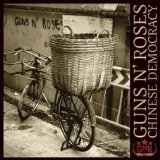 I trust that unspeak.net readers have now had time to digest the awesomeness that is Chinese Democracy by Guns N’ Roses, so thrillingly avant- and après-garde at the same time; and also to daydream about how even more mind-crushingly awesome it might have been were Slash still in the band. ((In a quixotically maximalist attempt at compensation, Axl has employed approximately 1,347 shredders to go widdly-widdly simultaneously on each track, but they never add up to the melodic improvisatory genius of a single Slash.)) But some people aren’t happy with the record. Notably, the Chinese government:
A newspaper published by China’s ruling Communist Party is blasting the latest Guns N’ Roses album as an attack on the Chinese nation […] In an article […] headlined “American band releases album venomously attacking China,” the Global Times said unidentified Chinese Internet users had described the album as part of a plot by some in the West to “grasp and control the world using democracy as a pawn.”
I think something must have got lost in translation here. How can you use a pawn to grasp the world? And how can democracy itself be a pawn? What does it get promoted to when it reaches the eighth rank? Benign dictatorship?
The album “turns its spear point on China,” the article said.
So let me get this straight. Axl Rose is playing global chess, using democracy as a pawn, while also holding a spear and pointing its pointy point at, um, China. Which is understandably frightened because it doesn’t have shitloads of nuclear weapons. These are strong allegations for “unidentified Chinese Internet users” to be making against an insaniac heavy-metal genius. ((There is some controversy over what is perhaps the album’s most insaniac moment, the way Axl sings the line “But I don’t want to do it” on “Sorry”. Chuck Klosterman thinks the accent employed here, and nowhere else, is “quasi-Transylvanian” or, alternatively, “Mexican vampire”. For my part, I am sure it is a deliberate impression of Derek Zoolander.))
But wait. Is Chinese Democracy really a musical version of neoconservative foreign policy? Let us consult the lyrics of the song that actually mentions China. It’s called, brilliantly, “Chinese Democracy”:
If they were missionaries
Real time visionaries
Sitting’ in a Chinese stew
To view my disinfatutation…
Not much about invading China and forcing democracy on it there. But the reference to “Chinese stew” as a bad thing to sit in is certainly an affront to traditional Chinese cuisine. Does this image of sitting in a stew, combined with the reference to “missionaries”, even imply cannibalism with Chinese characteristics?
I know that I’m a classic case
Watch my disenchanted face
Blame it on the Falun Gong
They seen the end
And you can’t hold on now…
Oh no, he mentioned Falun Gong, the nutty qigong sect that the Chinese government harshes on as an “evil cult”. What’s more, he seems to be endorsing whatever Falun Gong’s crazy apocalyptic vision ((A Falun Gong practitioner in comments assures us that they do not have any crazy apocalyptic vision of “the end”, which is nice.)) of “the end” is. It’s not looking good. Well, let us suspend judgment until the chorus:
Cause it would take a lot more hate than you
To end the fascination
Even with an iron fist
More than you got rule a nation
When all I’ve got is precious time
“More than you got [to] rule a nation” — well, we can relax: this whole song is merely an allegory, using geopolitical themes to describe a poisonous personal relationship. Right? Well, that is what is printed on the lyric sheet. However, in the first chorus what Axl seems to be actually singing is:
Even with an iron fist
All they got to rule a nation…
And “they” can be none other than the Chinese government, ruling the nation with nothing but their iron fists while Axl tries to grasp and control the world in his fist, which is not iron, but is holding both a pawn and a spear. It’s an exciting confrontation between massive fists, to be sure. Gary Barlow from Take That is trying to join in with his fist of pure emotion, but I’m not sure he understands the stakes.
The outro also has Axl screaming things not printed on the lyric sheet, including:
When your Great Wall rocks, blame yourself
If that’s not pointing a spear at China’s iron fist, I don’t know what is. Still, it could all be a brilliant metaphor, couldn’t it? Let us consult the artist’s own vision of what “Chinese Democracy” means. Back in 1999, Axl said:
Well, there’s a lot of Chinese democracy movements, and it’s something that there’s a lot of talk about, and it’s something that will be nice to see. It could also just be like an ironic statement. I don’t know, I just like the sound of it.
So do I! Do you, readers?
5 comments
Unspeak from ‘the Territories’
December 4, 2008 11 comments
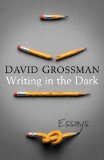

I have just read the excellent new collection of essays by David Grossman, Writing in the Dark. The first essay is called “Books that Have Read Me” (2002, available online here), and had I known of its existence while writing Unspeak I would surely have cited the following passage:
When a country or a society ?nds itself — no matter for what reasons — in a prolonged state of incongruity between its founding values and its political circumstances, a rift can emerge between the society and its identity, between the society and its “inner voice.” The more complex and contradictory the situation becomes and the more the society has to compromise in order to contain all its disparities, the more it creates a different system for itself, an ad hoc system of norms, of “emergency values,” keeping double books of its identity.
I am not saying anything new here. Those who live in such a reality, as we do in Israel, will ?nd it easy to understand how fears consolidate ideals around themselves, how needs become values, and how a subjective world-view and a self-image that is wholly unsuited to reality can materialize. A special kind of language then begins to emerge, one that is usually a manipulation on the part of those who wish to prolong the distorted situation. It is a language of words intended not to describe reality but to obfuscate it, to allay it. It depicts a reality that does not exist, an imaginary state constructed by wishful thinking, while large and complex elements of the actual reality remain wordless, in the hope that they will somehow fade away and vanish. In such conditions one of our most dubious talents arises: the talent for passivity, for self-erasure, for reducing the inner surface of our soul lest it get hurt. In other words, the talent for being a victim. […]
[In 1987] I was working as a newscaster on the Kol Israel radio news. I was given dozens, if not hundreds, of items to read that sounded something like this: “A local youth was killed during disturbances in the Territories.” Notice the shrewdness of the sentence: “disturbances” — as if there were some order or normative state in the Territories that was brie?y disturbed; “in the Territories” — we would never expressly say “the Occupied Territories”; “youth” — this youth might have been a three-year-old boy, and of course he never had a name; “local” — so as not to say “Palestinian,” which would imply someone with a clear national identity; and above all, note the verb “was killed” — no one killed him. It would have been almost intolerable to admit that our hands spilled this blood, and so he “was killed.” (Sometimes the passive voice is the last refuge of the patriot.)
11 comments